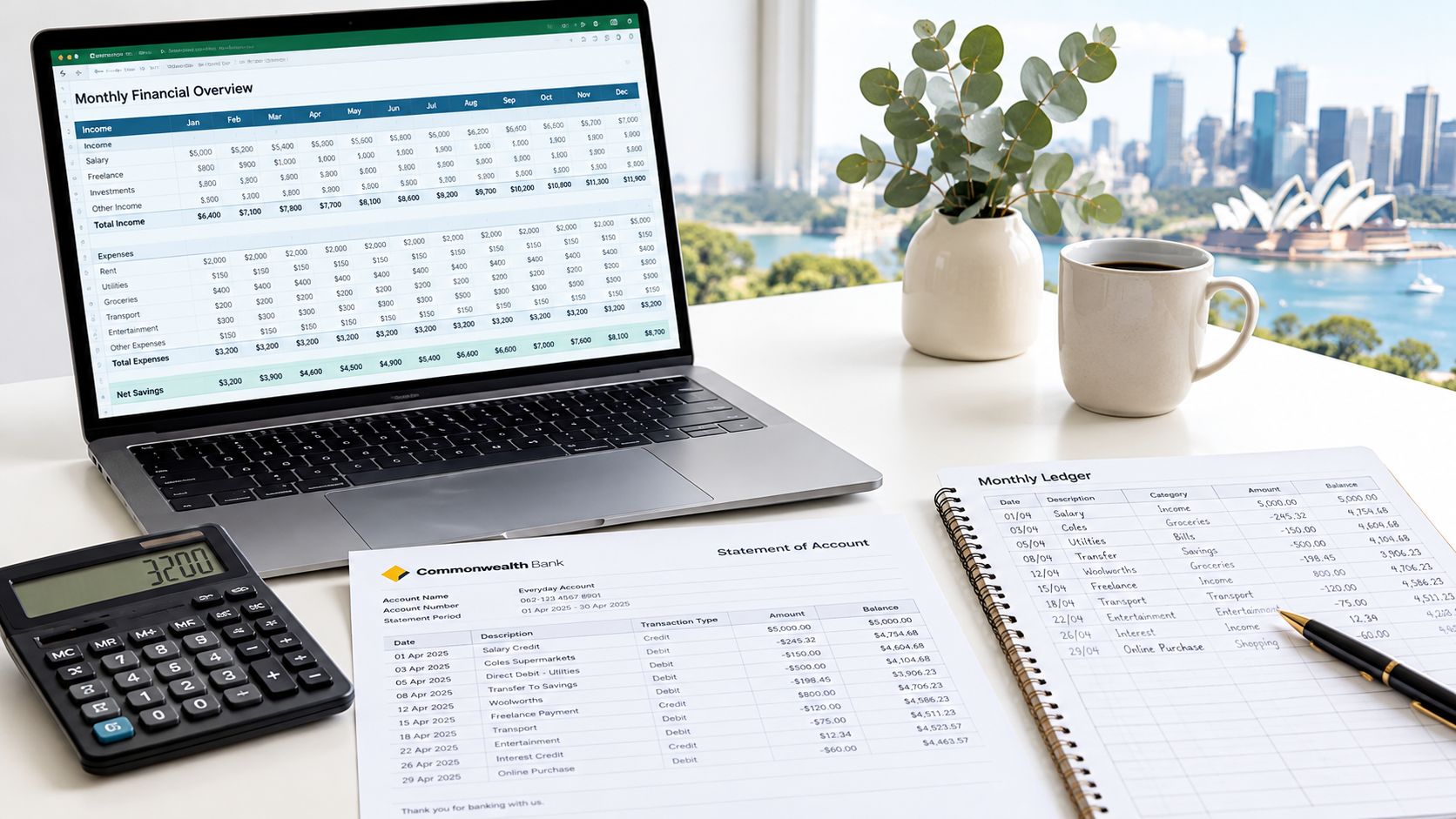

You're probably dealing with the same problem most agency owners are: the rent roll keeps moving, the inbox keeps filling, and the trust account still has to be right every single day. The software you choose isn't a side tool for tenant messages and landlord portals, it's the control layer that keeps receipts, disbursements, reconciliations, and audit evidence from turning into a monthly scramble.
| Platform choice | Best fit | Control priority | What to watch |
|---|---|---|---|
| Outsourced trust-account workflow | Small or solo agencies | Consistency and compliance | Clear approval boundaries and audit-ready records |
| Cloud-based operating platform | Growing agencies with remote teams | Access and continuity | Permissions, logging, and bank integration |
| Deeply configured system with strict process design | Multi-branch and high-volume agencies | Segregation of duties | Exception handling, approvals, and reporting discipline |
The wrong choice usually looks efficient at the demo and expensive at month end. The right choice makes it easier for your team to stay organised, keep approvals visible, and produce clean records when the auditor asks for them.
Table of Contents
- Why Property Management Software in Australia Is an Operational Necessity
- How Australian Trust-Account Legislation Shapes Software Requirements
- Key Functional Pillars to Compare in Property Management Platforms
- Automation Versus Human Control in Trust Accounting Workflows
- Realistic Uses and Limits of AI and Automation in Agencies
- Choosing the Right Property Management Software for Your Agency
How healthy is your trust account?
Book a complimentary 30-minute Trust Account Health Check and see where your processes could be improved.
Book a Free Health Check →Why Property Management Software in Australia Is an Operational Necessity
Australia's property-management market is too large for loose manual processes to survive for long. The Real Estate Institute of Australia reported that about 80% of Australian rental properties, or around 2.7 million homes, were professionally managed in 2021–22, and it also recorded about 4,300 property-manager vacancies advertised on SEEK in September 2021, which was roughly 10% of the national property-manager workforce at the time (REA submission to Treasury). That combination of volume and staffing pressure is exactly why property management software Australia buyers need to think like operators, not gadget shoppers.
Software is the control system, not the convenience layer
For an agency, the daily job is not just “managing properties”. It's receiving rent, allocating funds, preparing owner payments, tracking maintenance, and preserving a clean record of every movement. Software becomes the structure that keeps those tasks repeatable when a senior trust account person is on leave, a new assistant is learning the ropes, or turnover leaves a gap in the workflow.
Practical rule: if a process can't survive staff churn, it isn't a process, it's a memory.
That's why the bookkeeping challenge deserves attention before the feature list does, and why a separate operating model matters as much as the software itself. Agencies that treat trust accounting as an afterthought end up patching problems later, usually at the worst possible time, as discussed in this bookkeeping guide for real estate agents.
Volume changes the software brief
At the scale described by the REIA figures, software must support routine transactions without creating avoidable friction. A system that looks friendly in a sales demo can still fail in practice if it cannot keep records stable through staff change, growth, and time pressure. The point is simple, high-volume agencies need repeatability first, polish second.
Could outsourcing save your agency time and money?
Book a complimentary 30-minute Trust Account Health Check and see where your processes could be improved.
Book a Free Health Check →That also changes how you evaluate vendors. Don't ask whether the platform looks modern. Ask whether it helps your office keep the same standard of control on a busy Monday morning, during month-end, and in the middle of a staffing gap.
Keep Your Trust Accounts Audit Ready
Reliance Property Accounts provides experienced outsourced trust accounting support for Australian real estate agencies, helping keep accounts accurate, organised and compliant.
How Australian Trust-Account Legislation Shapes Software Requirements
Australian property software lives inside a regulated trust-account environment, and that changes the buying decision completely. In New South Wales, licensees who receive or hold client money must maintain a trust account and comply with statutory management and audit rules under the Property and Stock Agents Act 2002. The NSW Government states that trust-account audits cover the period ending 30 June and must be submitted online by the auditor within three months after that period, no later than 30 September (NSW trust account audit requirements). That deadline alone should shape your software selection.
State rules come first, software features second
A platform can say “compliant” and still leave your agency exposed if the workflow doesn't match the relevant state or territory rules. The critical question is whether the system supports the way your office manages trust money, with the right permissions, the right approval steps, and the right recordkeeping discipline. Multi-state groups need to go further, because one branch's process may not satisfy another branch's legislative obligations.
Configuration matters more than branding. If your software can't map to the local audit calendar, preserve transaction history, and support reliable reconciliation records, it's not fit for purpose, no matter how slick the interface is. A generic workflow is not a compliance strategy.
Audit readiness is built, not bolted on
An auditor doesn't care how easy the platform feels. The auditor cares whether the records are complete, whether the sequence makes sense, and whether the evidence holds together under review. That's why transaction histories, supporting documents, and reconciliation trails need to be treated as core system outputs rather than optional exports.
If you want a direct benchmark, compare each platform against the trust-account obligations described above, then pressure-test the workflows against your own state rules. For a deeper compliance lens, the guide at what trust account compliance means in practice is the right companion reading.
Key Functional Pillars to Compare in Property Management Platforms
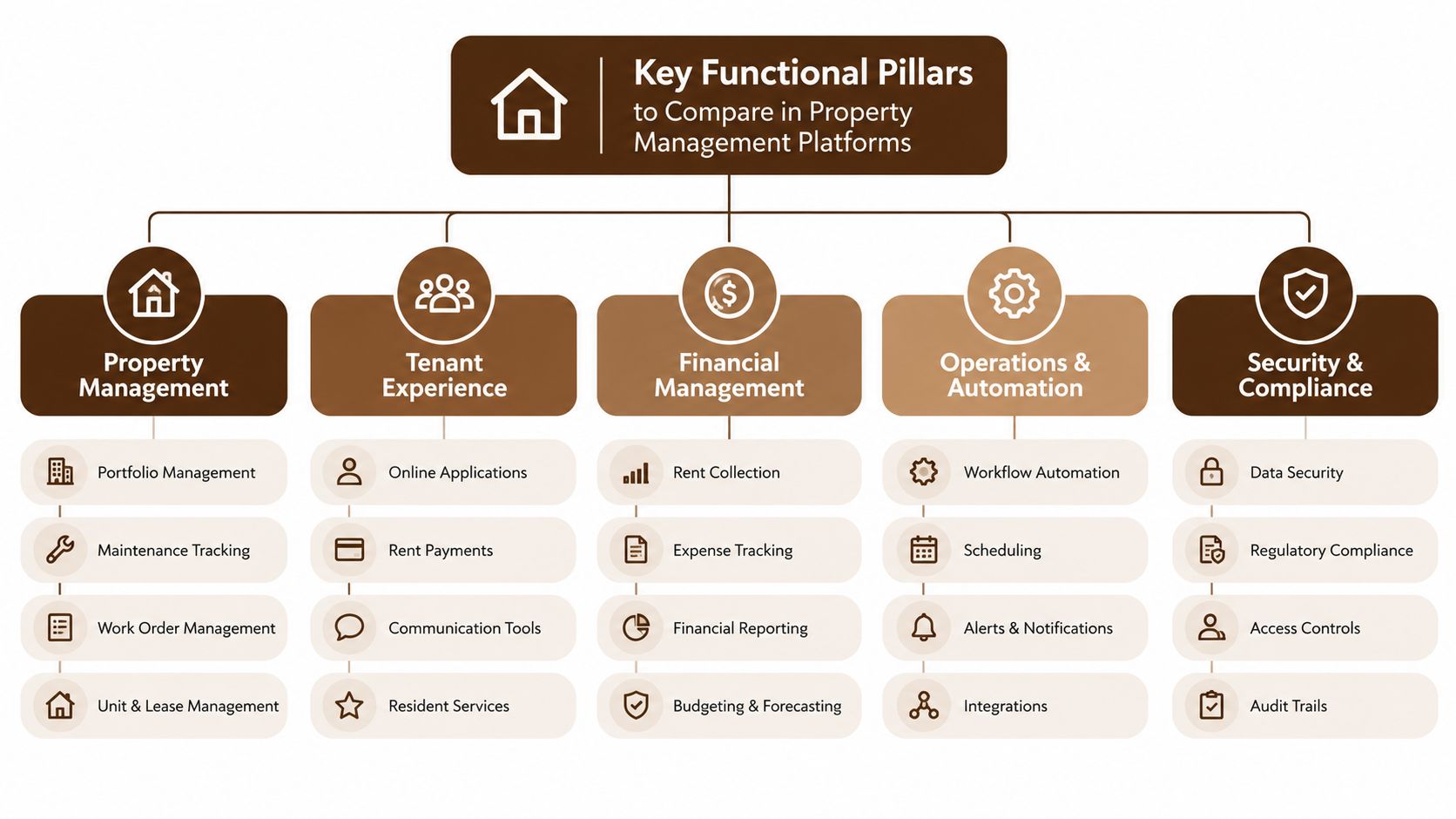
The useful comparison is not “what features does it have”, it's “what work does it control well”. For trust-account-heavy agencies, the best platforms reduce manual re-entry, keep preparation separate from approval, and make exceptions obvious before they become errors. For a practical benchmark, use the categories below and score each system against your real workflow, not the vendor's marketing deck.
| Functional pillar | What strong software should do | What weak software usually does |
|---|---|---|
| Receipt and disbursement handling | Track money movements clearly and preserve the sequence | Hide steps inside a generic transaction screen |
| Reconciliation | Support consistent bank matching and exception visibility | Leave staff to resolve mismatches manually |
| Payment batch preparation | Make batch building structured and reviewable | Encourage ad hoc processing |
| Audit logs | Record who prepared, who reviewed, and when | Log activity without meaningful context |
| Banking integration and exports | Move data cleanly between systems with minimal rekeying | Create duplicate work and spreadsheet dependence |
Cloud access is now a practical baseline
Rockend research reported that 62% of Australian property-management businesses used cloud-based software in 2021, up from 42% the previous year (Rockend research summary). That shift says something important. Remote access, continuity, and integration are no longer premium extras, they're part of the baseline.
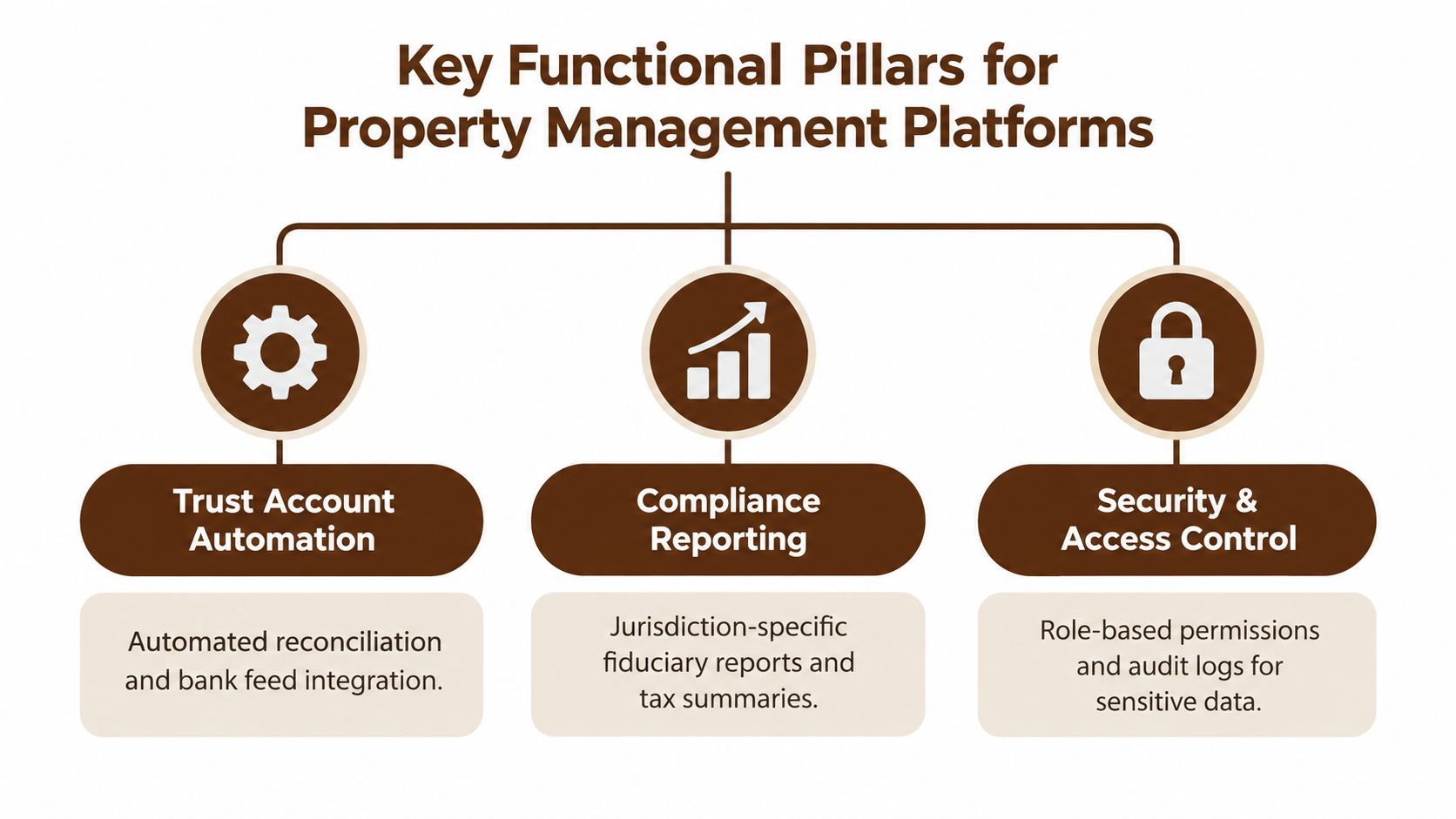
For a trust-account team, cloud capability only matters if it comes with controlled workflows. Secure browser access, granular permissions, multi-factor authentication, activity logging, and reliable data export matter more than a flashy dashboard. If the bank feed is live but the approval trail is muddy, the system is still weak.
Test the process, not the pitch
Run the same scenario through every shortlisted system. Receipt, owner disbursement, failed payment, reconciliation, correction, month-end report. Then compare how long it takes, how clearly exceptions show up, and how strong the evidence looks at the end.
Ask one question in every demo, can a new staff member understand what happened six weeks later?
That question cuts through feature theatre fast. If the answer depends on tribal knowledge, you're looking at a risk, not a solution.
For agencies wanting a more trust-account specific comparison, this software overview for real estate trust accounting is the right standard to apply before you sign anything.
Improve Trust Account Workflows
Reliance Property Accounts helps agencies review and optimise trust accounting processes, with practical support around reconciliations, reporting, and day-to-day control.
Automation Versus Human Control in Trust Accounting Workflows
A lot of agencies confuse automation with control. They're not the same thing, and in trust accounting that difference matters more than speed. If software removes keystrokes but blurs responsibility, you've made governance harder, not easier.
Separate preparation from approval
The practical questions are blunt. Who prepares the batch, who verifies the payee details, who approves the release, and what happens when something doesn't fit the normal path? If the system can't show those steps cleanly, then your audit trail is too weak for comfort.
Good software keeps the human decision points visible. It should show who entered the information, who checked it, and who authorised the payment. It should also make exception handling obvious so a missed item doesn't hide in a queue.
Payee changes need independent checking
Many offices become vulnerable at this stage. A changed bank account detail should not move through a workflow just because it was entered by a trusted team member. It needs a proper verification step, a clear record, and a permission model that limits who can act on it.
Strong control beats fast processing. If the approval path is unclear, the workflow is already broken.
The safest agencies design around segregation of duties. One person prepares. Another approves. Exceptions are escalated, not waved through. That structure can feel slower on day one, but it protects the office when something goes wrong.
Automation should reduce noise, not responsibility
Use automation where it removes repetitive admin and improves visibility. Don't use it to hide responsibility. A platform that speeds up batch preparation but weakens approval discipline is the wrong trade-off for trust money.
That's the right way to evaluate any property management software Australia shortlist. Not “How many tasks does it automate?” but “Which tasks remain under accountable human review?” If the answer is vague, keep looking.
Realistic Uses and Limits of AI and Automation in Agencies
A 2025 Australian property-industry survey reported that 49.1% of agencies were already using some AI or automation for everyday communications (TrustSoft blog). That sounds impressive, but it doesn't tell you much about higher-risk trust-account functions. Everyday messaging and trust-ledger control belong in different risk categories.
Good uses are narrow and useful
AI can help where the task is repetitive and low-risk. Drafting routine tenant communication is a sensible use. So is identifying unreconciled items, categorising bills, or flagging unusual transactions for review. Those uses support staff judgment without replacing it.
The benefit is practical. You get faster triage, cleaner queues, and less time wasted on obvious admin. The person stays in control, which is exactly how it should be.
Bad uses cross the line
AI should not approve payments on its own. It should not change beneficiary details. It should not interpret state legislation without review, and it should not decide whether a transaction is compliant. Those are control decisions, not drafting tasks.
The same applies to automation more broadly. If a tool is making irreversible trust-account decisions without a human sign-off point, the workflow is too risky. The stronger design is one where the software suggests and the authorised person decides.
Ask for evidence, not branding
Vendor claims about AI are cheap. Permission design, correction logs, data-retention rules, and vendor access controls are what matter. So does the ability to review an action after the fact and understand why it happened.
That's why the best question isn't “Does it use AI?” The best question is, “Where does AI stop, and where does the accountable officer begin?” Agencies that can answer that cleanly are in a stronger position than those chasing the newest label.
Choosing the Right Property Management Software for Your Agency
The right platform depends on your size, your staffing model, and how much trust-account responsibility you want to hold internally. Small agencies often need simplicity and continuity. Larger groups need stronger permissions, cleaner reporting, and workflows that survive turnover without creating a back-office mess.
Small or solo agencies
If you're a small office or a solo principal, don't overbuy. You need software that supports the basics without forcing you to build a miniature finance department around it. In many cases, the best fit is a setup that pairs established property software with outsourced trust-account support, so the office stays stable even when workload spikes or the principal gets pulled into sales and management work.
For this group, the priority is not flashy automation. It's accurate receipting, consistent reconciliations, and clean records. If the platform is simple enough for one or two people to maintain but strong enough to stay audit-ready, that's the right balance.
Growing multi-branch agencies
Once you've got multiple offices or a growing team, permissions matter much more. You need role-based access, approval workflows, reliable audit trails, and clear reporting boundaries between people who prepare and people who authorise. Growth creates pressure, and pressure exposes weak control design quickly.
This is also where cloud access becomes useful. Distributed teams need continuity when someone is away, and they need a shared source of truth that doesn't depend on one person's laptop or inbox. A platform that works only when the “right” staff member is present is a liability, not an asset.
High-volume agencies with complex transaction flow
If your agency handles a heavy transaction load, don't pick software on interface alone. You need tight bank integration, strong exception handling, disciplined month-end processing, and reporting that stands up under scrutiny. The system should help your team see problems early, not bury them under automation.
For these agencies, run a live workflow test before you commit. Use an actual receipt, a real disbursement scenario, a failed payment, and a month-end close. If the system produces confusion at that stage, it will produce pain at scale.
Need Reliable Cover for Your Trust Accounting Team?
Reliance Property Accounts can step in with experienced support during leave periods, staffing gaps, or busy stretches, helping agencies maintain continuity without losing control of the ledger.
The direct recommendation is this. Choose software based on control, not presentation. Choose outsourcing where it protects the trust account, and choose internal ownership only where your team can sustain the process. That's the standard that keeps agencies organised, compliant, and audit-ready.
If you want a practical trust-account setup that fits real agency workflows, speak with Reliance Property Accounts. They handle daily trust accounting, reconciliations, payment preparation, and compliance support so your team can stay focused on the portfolio without losing control of the ledger.