
NSW licensees must hold client funds in separately registered trust accounts at an NSW ADI, with a UID issued by NSW Fair Trading. Only an appointed Class 1 licensee in charge may authorise withdrawals, rent and sales money must sit in separate accounts, and annual audits for the year ending 30 June must be lodged to Auditor’s Report Online by 30 September.
Key Takeaways
Proper management of trust accounts in NSW relies on strict adherence to legal, procedural, and recordkeeping obligations to avoid penalties and ensure audit readiness.
How healthy is your trust account?
Book a complimentary 30-minute Trust Account Health Check and see where your processes could be improved.
Book a Free Health Check →| Point | Details |
|---|---|
| Trust account registration | Every trust account must be registered with NSW Fair Trading and have a UID that remains on all audit documents. |
| Separate accounts for different funds | Rental and sales trust funds must be kept in separate accounts, and mixing funds is a breach of rules. |
| Authorized withdrawals only | Only a Class 1 licensee in charge can approve withdrawals, which can only be made via electronic transfer or cheque. |
| Timely and accurate recordkeeping | Daily receipts must be banked promptly; trust ledgers and reconciliations must be maintained and available for audits. |
| Reliancepa ensures compliance | Reliancepa manages daily trust account reconciliations, approval processes, and audit documentation to keep agencies compliant. |
Table of Contents
- Statutory essentials: where the rules come from and what can’t be ignored
- Compliance checklist for daily to monthly operations
- Audits and lodgement: Auditor’s Report Online explained
- Recordkeeping, acceptable systems and unclaimed money
- Breaches, enforcement and the Property Services Compensation Fund
- Practitioner perspective: making compliance a habit, not a panic
- How Reliance Property Accounts keeps your trust account audit-ready
- FAQ
- Sources
- Authoritative NSW pages and guidance to bookmark
Statutory essentials: where the rules come from and what can’t be ignored
Trust accounting obligations for NSW real estate agencies sit in the Property and Stock Agents Act 2002 and the Property and Stock Agents Regulation 2022. These set out how trust money is held, who can touch it, and what gets reported when something goes wrong.
Every general trust account must be registered with NSW Fair Trading, which issues a unique identifying number (UID) for that account. The UID follows the account for its life and appears on every audit lodgement, so getting the registration details right from day one matters more than it might seem.
Accounts must be held at an authorised deposit-taking institution within NSW, and agencies must keep separate general trust accounts for rental money and sales money. Mixing the two, even temporarily, breaches the rules regardless of intent.
Withdrawals can only happen by electronic funds transfer or cheque. Cash withdrawals from a trust account are not permitted under any circumstance, and only a Class 1 licensee in charge can authorise a transaction, a responsibility that cannot be delegated to another staff member.
Compliance checklist for daily to monthly operations
Turning the legislation into daily habits is where most agencies either stay clean or slowly drift into trouble. A short, repeatable checklist keeps the basics covered without needing to re-read the Act every week.
- Bank all trust receipts the same day or the next business day, and receipt funds immediately on receipt rather than batching them.
- Maintain a separate ledger account for each client and produce a trial balance for every trust account held.
- Set up unique logins for every staff member with trust account access, never shared passwords, and document who is responsible for which task.
- Require written pre-authorisation from the LIC before any withdrawal is processed, and keep a record of who physically effected the transfer, since the LIC can pre-authorise an EFT in writing even though the authority itself cannot be delegated.
- Reconcile every trust account monthly, retain the reconciliation with supporting bank statements, and file it where an auditor can find it quickly.
- Register new trust accounts before using them, and notify NSW Fair Trading within 14 days of closing one, as outlined in Service NSW’s trust account guidance.
Pro Tip: Keep the trust-account closure confirmation notice for three years after closing an account, since Fair Trading may request it during a later audit or compliance check.
The weak point in most agencies isn’t the big rules, it’s the small habits: a receipt entered two days late, a reconciliation that gets done “when there’s time”, a login shared because setting up a new one felt like a hassle. Each of these is a finding waiting to happen.
Could outsourcing save your agency time and money?
Book a complimentary 30-minute Trust Account Health Check and see where your processes could be improved.
Book a Free Health Check →Audits and lodgement: Auditor’s Report Online explained
The audit period runs to 30 June each year, and the completed audit must be lodged via Auditor’s Report Online by 30 September. Late lodgement risks fines and can affect a licence, so the deadline deserves a calendar reminder well before it arrives.
An audit is required whenever a licensee held or received any trust money during the period, and an account with a balance but no transactions still needs auditing. Only an account with nil transactions and a zero balance for the entire period is exempt.
The portal itself requires specific details from the auditor, so having these ready before the appointment saves time:
- Entity details including ABN or ACN
- The trust account UID
- BSB and exact bank account number
- Monthly reconciliations and a trial balance
- Supporting evidence for any financial breach identified
Submission errors most often come from a mistyped UID or an incorrect account number, so checking these against the bank statement before lodgement avoids an easy delay. Gathering bank statements, reconciliations and ledgers in the weeks before the audit, rather than scrambling in August, turns lodgement into a formality instead of a fire drill.
Recordkeeping, acceptable systems and unclaimed money
Agencies need daily records of receipts and payments, a separate ledger for each client, and a trial balance that reconciles to the bank statement. Manual ledgers are acceptable as long as entries are permanent and sequential, but guidance repeatedly flags Excel and general bookkeeping packages like MYOB as non-compliant when used in place of a proper trust accounting system or approved manual ledger.
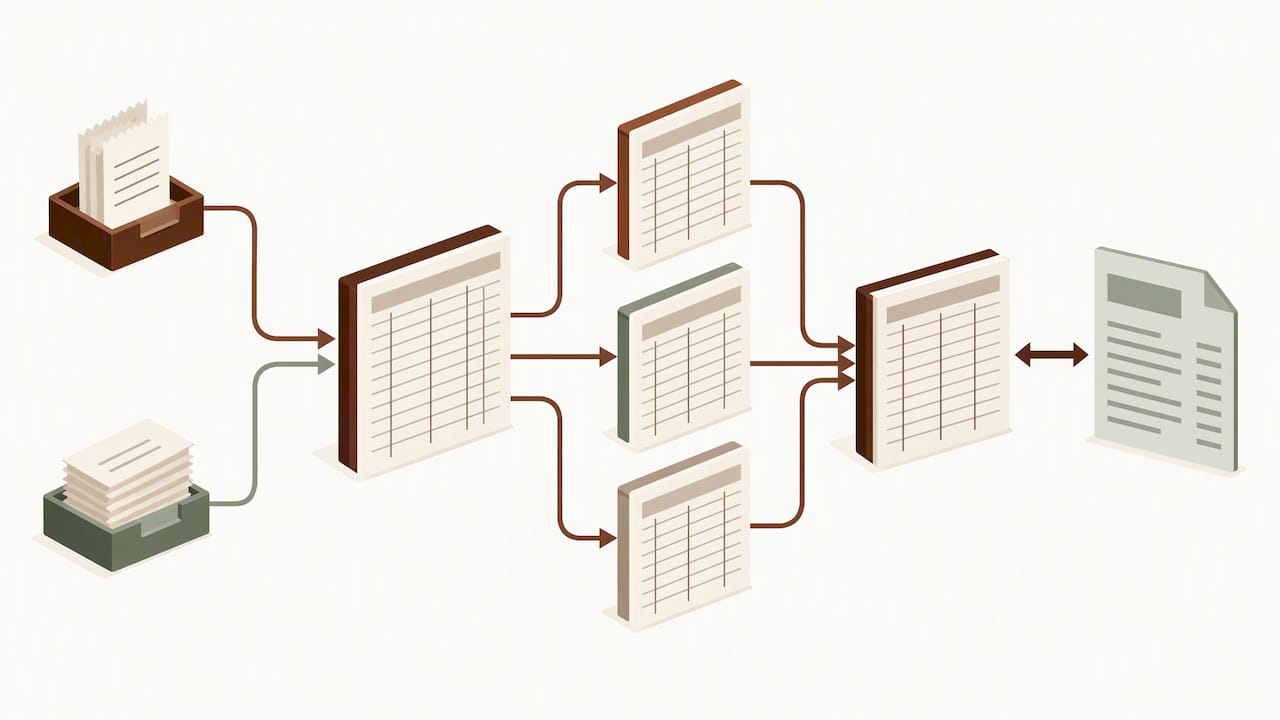
Records need to be available for audit at short notice, and any digital system should give each user their own login rather than a shared one.
Trust money can become classed as unclaimed if it’s held for more than two years, and agencies must make reasonable efforts to locate the owner before reporting the funds to Revenue NSW. Documenting those efforts, phone calls, letters, searches, protects the agency if the matter is ever questioned later.
Breaches, enforcement and the Property Services Compensation Fund
Audits commonly flag mixed rent and sales funds, withdrawals made without proper LIC authorisation, weak reconciliation records, or audits lodged late. NSW Fair Trading can issue penalties ranging from fines to licence action depending on severity.
The Property Services Compensation Fund can assist people who lose money because an agent failed to account for trust funds, though strict claim time limits and documentation requirements apply. If a discrepancy turns up, notify Fair Trading, preserve every record untouched, and bring in an auditor immediately.
Practitioner perspective: making compliance a habit, not a panic
Written procedures and visible LIC oversight do more to reduce risk than any single policy. According to supervision guidelines, documented processes for authorisation, security and monthly reviews are the core of risk mitigation, and small fixes (unique logins, daily banking, pre-authorisation templates) resolve most recurring audit findings. For agencies stretched thin, outsourcing trust accounting to a specialist frees internal capacity while keeping records audit-ready year-round.
— Kasie
How Reliance Property Accounts keeps your trust account audit-ready
We built our service around a simple idea: an agency shouldn’t have to choose between focusing on property management and staying compliant. We manage trust accounts daily, adapting to the systems agencies already use rather than forcing a new workflow onto their teams.

Our day-to-day work covers:
- Daily reconciliations, receipting and bill entry so records stay current, not weeks behind
- Owner disbursements and supplier payments processed accurately and on schedule
- Internal ledger review and audit-ready documentation maintained continuously
- LIC authorisation retained in full, your agency approves every release, we handle the administrative load
Every engagement is tailored to the agency’s own processes, and approvals stay exactly where they belong: with your licensee in charge. If daily trust accounting is pulling your team away from the work that grows your business, learn more about our outsourced trust accounting service or visit our home page to see how we fit alongside your existing systems.
This article is general information, not a substitute for advice from a qualified financial advisor. Consult a qualified financial professional about your own circumstances before acting on anything here.
FAQ
What is a UID and how do I register a trust account in NSW?
A UID (unique identifying number) is issued by NSW Fair Trading when you register a trust account, and it’s required for every general trust account an agency operates. You can open, register or close a trust account through Service NSW, and the UID must be quoted on audit lodgements.
Who can authorise withdrawals from a real estate trust account in NSW?
Only a Class 1 licensee in charge can authorise a trust account withdrawal, and this authority cannot be delegated to another staff member. The LIC can pre-authorise a specific transaction in writing so someone else can physically process the electronic transfer, provided the authorisation and the person who acted on it are both recorded.
When is the NSW trust account audit due each year?
The audit period runs to 30 June, and the completed audit must be lodged through Auditor’s Report Online by 30 September. An audit is required if the agency held or received any trust money at all during that period.
Can I use Excel or MYOB for trust account recordkeeping?
General guidance flags Excel and standard bookkeeping packages like MYOB as non-compliant when used as a substitute for a proper trust accounting system or an approved manual ledger. A manual ledger is acceptable as long as entries are permanent and kept in sequential order.
What happens to trust money that’s never claimed?
Trust money can be classed as unclaimed once it’s been held for more than two years, and agencies must make reasonable efforts to locate the rightful owner before reporting it to Revenue NSW. Keeping a record of those efforts protects the agency if the matter is reviewed later.
Sources
- Real estate trust accounts and audit requirements | NSW Government
- Open, register or close a trust account (property) | Service NSW
- Property Services Compensation Fund explanatory notes | NSW Fair Trading
Authoritative NSW pages and guidance to bookmark
A handful of official pages cover most of what an agency needs for ongoing compliance. NSW Fair Trading’s trust accounts and audit requirements page and its supervision guidelines are the primary reference points for day-to-day obligations.
For lodging the annual audit, the guide to the Auditor’s Report Online portal and the broader lodging audits page walk through auditor requirements. Service NSW handles account registration and closure, and the Property Services Compensation Fund explanatory notes set out claim processes for trust money losses.